US speed limits and driving laws by state: what differs where
8 min read
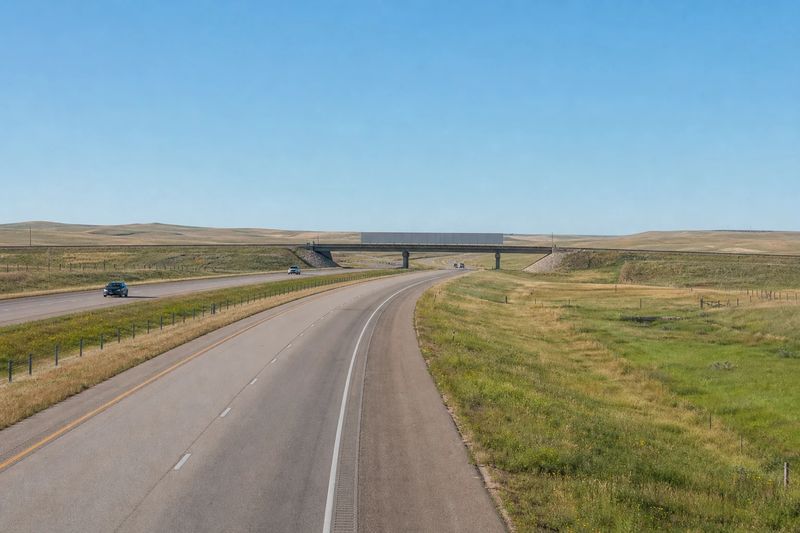
Driving across several US states in a day is easy in the sense that nothing about the road tells you anything has changed. The pavement continues, the interstate keeps its number, and the traffic does what it was doing an hour ago. What changes is the law you are driving under.
Traffic law in the United States is mostly state law. Each state sets its own maximum speeds, its own rules about phones, restraints, turns and lights, and its own penalties. There is no single national rulebook to learn, which means the useful skill is not memorizing numbers but knowing which categories tend to differ, so you know what to look up before a long trip.
Speed limits: what varies, and what always applies
One thing is constant everywhere: the posted limit governs. Whatever the state maximum is, whatever you read before you left, the sign on the road you are on is the number that applies. That is worth stating plainly because the rest of this is about variation.
Maximums are set by state, and by road class within the state
Each state’s legislature sets the ceiling for its roads, and the state transportation department posts limits on individual roads within that ceiling. Two consequences follow.
The first is that the same class of highway can carry different maximums in neighboring states, and the change can happen shortly after the welcome sign. Nothing about the road announces it; a new sign appears and that is the whole notification.
The second is that the limit varies as much within a state as between states. Road class drives this, and the pattern is consistent nationally even though the numbers are not:
- Rural interstates carry the highest posted limits.
- Urban interstates and beltways carry lower ones, often stepping down as you approach a metropolitan area and back up on the far side.
- Divided highways outside cities sit below rural interstate levels.
- Two-lane rural roads lower again.
- Anything running through a built-up area lower still, sometimes changing several times in a few miles.
As a rough generalization, the highest limits in the country tend to be found on rural interstates in western states, where distances are long and population density is low, and the lowest highway limits in dense northeastern corridors. But that is a tendency, not a rule to drive by, and it tells you nothing about the specific road you are on.
Variations that are easy to miss
Beyond the basic maximum, several kinds of variation exist that a driver used to one state may not expect:
- Different limits for trucks. Some states set a lower maximum for heavy trucks or for vehicles towing trailers than for passenger cars on the same road. Where it applies, it is posted. If you are towing, the limit applying to you may not be the one the traffic around you is running to.
- Minimum speeds. Some highways post a minimum as well as a maximum.
- Night limits. A small number of jurisdictions have historically set different limits after dark, or for specific vehicle types at night.
- How the limit is treated legally. States differ in whether the posted number functions as an absolute ceiling or as a presumption that can be argued about. This matters mostly after the fact, and it is not a reason to treat any posted limit as advisory.
Work zones, school zones and the basic speed rule
Two categories carry higher penalties almost everywhere. In work zones, reduced limits are generally enforceable whether or not anyone is working, and fines are commonly increased. In school zones, the reduced limit may apply only during posted hours or while a signal flashes, which is much harder to judge in an unfamiliar town than in your own. In both cases the right move is to slow to the posted figure and not attempt to work out whether the zone is currently active.
Separately, most states have some version of a basic speed rule: driving at a speed that is unsafe for the conditions can be an offense even if you are under the posted limit. In fog, heavy rain or snow, the posted number stops being the relevant one.
The laws most likely to catch out a visiting driver
Speed gets the attention, but the rules that produce surprises on a long trip are usually the small behavioral ones, because you follow them by habit rather than by reading.
These are the categories where state-to-state differences are common enough to be worth checking before you go. What follows is deliberately about what differs rather than where, because the specifics change and the only reliable source is the state itself.
Phones and devices
This is the single most variable category. States differ on whether handheld use is prohibited outright or only for texting, whether the prohibition applies to all drivers or only younger ones, whether it applies in particular zones, and whether an officer can stop you for it on its own. Cities sometimes add rules of their own.
The practical answer for a multi-state drive is to remove the question: set up navigation and music before you move, and treat handheld use as prohibited for the entire trip regardless of where you are.
Right turn on red
Turning right on a red light after a full stop is broadly permitted across the country unless a sign prohibits it — and prohibitions are common, local and easy to miss, especially in dense urban areas where a small sign is competing for attention with everything else at the intersection. Read the intersection rather than driving the habit.
Move-over rules for stopped vehicles
Every state requires drivers approaching a stopped emergency vehicle with active lights to move out of the adjacent lane where it is safe, or slow substantially if they cannot. What differs is which vehicles are covered — police, fire and ambulance everywhere, and in many places tow trucks, utility vehicles, maintenance vehicles and ordinary disabled cars as well — and how much slowing is required. Treat the general obligation as universal.
Rules that differ quietly
The three above are the ones drivers hear about. The following differ just as much and get less attention, mostly because they are the rules you comply with without thinking until the day you do not.
Lights, wipers and visibility
Requirements differ on when headlights must be on: after dark everywhere, but also in reduced visibility, in some places whenever wipers are in use, and in some places on specific marked sections of road. Rules on daytime running lights, fog light use and window tint also vary.
Restraints and passengers
Child restraint law differs meaningfully between states on the ages, heights and weights at which a child moves between a rear-facing seat, a forward-facing seat, a booster and a belt, and on where in the vehicle a child may sit. Rear-seat belt requirements for adults also differ. If you are traveling with children across several states, this is the category most worth checking properly.
Equipment and enforcement details
Radar detector legality differs, and differs again for commercial vehicles. So do rules on U-turns, on left-lane use and keeping right, on HOV lane hours and occupancy requirements, on open container and cannabis transport, on motorcycle helmets, on studded tires and chains seasonally, and on whether front license plates are required.
If you are stopped far from home
States share driver information through long-standing interstate arrangements, so a citation collected on a trip can end up on your home record and be treated much as a local one would be. How that plays out depends on which states are involved and on the offense.
The useful planning assumption is simply that an out-of-state ticket is not a local problem you drive away from. Anything with real consequences attached — points, a suspension, a court date you would have to travel back for — is a question for a licensed attorney in the state concerned, not something to resolve from a summary written anywhere else.
What is worth knowing in advance is procedural rather than legal: keep your license, registration and proof of insurance where you can reach them without emptying the car, and know which state you are actually in, which is less obvious than it sounds after several hours on an interstate that has crossed two lines since your last stop.
How to check a route properly
The work is small if you do it in the right order.
Start by listing the states the route actually passes through. That list is often longer than people assume, because a long interstate run can clip a corner of a state for forty miles, and those are exactly the states where you will not be thinking about local rules. Working out the route and the towns along it is what makes the list accurate — you can get both from the calculator, along with the distance and drive time, from the calculator on the home page.
Then, for each state:
- Read the state’s own transportation or motor vehicle department pages rather than a third-party summary. Official sources are current; summaries frequently are not.
- Check the phone rule, the child restraint thresholds if relevant, and anything specific to what you are driving or towing.
- Note anything seasonal, such as chain or studded tire requirements on mountain routes.
- Look up the state’s road conditions service while you are there, since you will want it on the day you travel.
Then drive to the signs. Every state’s posted limit reflects decisions about that specific road that no general rule can capture, and no amount of preparation replaces reading what is in front of you.
For the planning side — how far a day should be, where the stops go, and what a realistic drive time looks like on the roads you have chosen — the guides cover it in more detail.