Driving to Seattle-Tacoma International: access roads and parking
6 min read
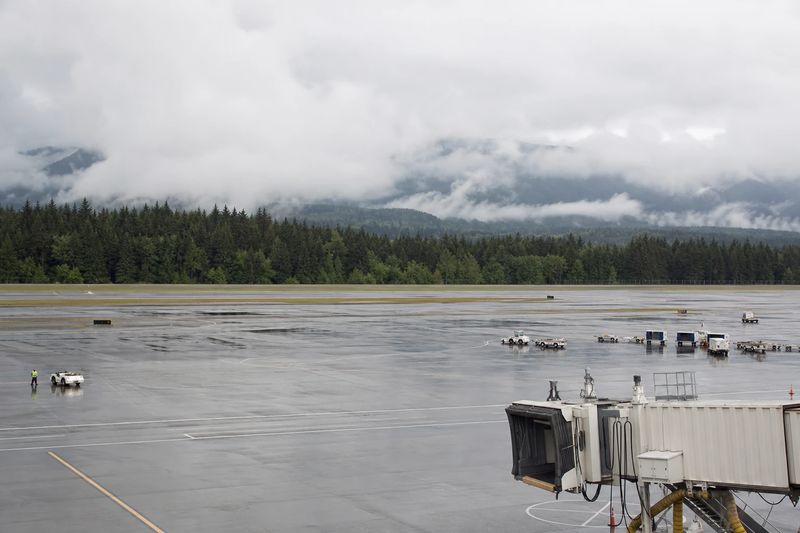
Seattle–Tacoma International Airport (SEA) sits about 15 miles by road from downtown Seattle, WA — roughly 30 min of driving, or 10.9 miles in a straight line.
Sea-Tac has a name that tells you where it is. It sits between Seattle and Tacoma, serves both, and draws from most of the area in between, which is why the drive to it is a real journey from either end rather than a short hop from one.
Getting there by road
I-5 is the spine of the region and the road most people use for most of the trip. The airport itself is reached from SR 518, a short east-west connector that links I-5 and I-405 to the terminal roadway. From the south, SR 509 and I-5 both feed in. Along the eastern boundary of the airport runs International Boulevard, better known locally as Pacific Highway South, which is where most of the off-airport hotels and parking lots are.
The route is simple. The timing is not. Southbound I-5 through Seattle carries commuters, freight and long-distance traffic in the same lanes, and it slows in the morning and again from mid-afternoon through the early evening. If you are coming from the Eastside, going down I-405 and across on SR 518 avoids the city section entirely and is often the better bet even when it looks longer on the map.
Coming up from Tacoma and the south, I-5 to SR 518 is the standard approach, though SR 509 is a useful alternative when I-5 through Federal Way and Kent has stopped moving. Coming down from Seattle, the same SR 518 exit does the work. The temptation on a bad day is to leave I-5 early and run down International Boulevard instead; that is usually slower, because the boulevard is a signal-heavy arterial, but when the freeway is genuinely stationary it can be the better of two poor options.
The terminal roadway is split by level, with departures above and arrivals below. Decide which one you want before you are in the lane for it. Correcting the mistake means another circuit, and the circuit is not short.
The terminal, the concourses and the satellites
There is one main terminal building with concourses attached to it, and two separate satellite buildings that cannot be reached on foot. Those are served by an underground automated train, the Satellite Transit System, which runs continuously.
This is the part of Sea-Tac that surprises people. From the outside it does not look like an airport where you might need a train to reach your gate, but if your flight leaves from a satellite then the train is compulsory, not optional. The walk down to it and the ride across add up to more time than most travelers allow.
For a driver, none of this changes the approach — there is one terminal frontage to aim for. It changes how much time you need after you have parked.
Parking
The main garage sits directly opposite the terminal and connects to it by covered walkways above the roadway. By the standards of large American airports this is generously convenient: you can be out of the car and inside the building in a couple of minutes without crossing traffic or waiting for a bus.
That convenience is priced accordingly. Cheaper long-stay parking is available off the airport, mostly along International Boulevard, with shuttle buses running to the terminal. The usual arithmetic applies. For a couple of days, the garage is worth it. For two weeks, it is not, and the shuttle is a minor inconvenience rather than a real one. In the summer peak the more convenient levels of the garage fill early in the morning, which is one more reason not to cut the timing fine.
There is also a designated waiting area for drivers meeting an arriving passenger, which is a better plan than looping the terminal roads.
The light rail alternative
Sea-Tac has one of the more useful airport rail links in the United States. The Link light rail line serves a station beside the garage, with a covered walk through to the terminal, and runs north through the middle of Seattle and onward.
Its real advantage is not speed. It is that a train does not care what I-5 is doing. If you are staying anywhere near the line and traveling without much luggage, it removes both the traffic risk and the parking decision in one move. If you are leaving at five in the morning with a family and three checked bags, drive.
Driving in from further out
The airport’s catchment is wide. Tacoma and Olympia come up from the south, Everett and Bellingham down from the north, and the Eastside cities across on I-405. All of those are routine airport runs and all of them are made harder by the same peak-hour congestion.
Further out, Portland is a long but perfectly manageable drive up I-5, and people make it when the schedule or the fare justifies it. Vancouver in British Columbia is closer in miles but adds a border crossing, where the queue rather than the road is the variable. From eastern Washington the drive comes over the Cascades, and in winter the passes are the thing to check before anything else — a pass restriction can add hours to a trip that looked fine the night before.
If you are comparing this drive against flying from a smaller airport nearer home, weigh it door to door: the drive plus parking plus the terminal, against a shorter drive and a connection. The distance table below covers the first part, and the other airport guides cover the alternatives.
Driving to SEA from nearby cities
Estimated road distances and drive times to the terminal area. Add your own margin for parking, the shuttle and check-in — these figures cover the drive only.
| From | Distance | Drive time |
|---|---|---|
| Seattle, WA (downtown) | 15 mi | 30 min |
| Burien, WA | 3 mi | 6 min |
| Renton, WA | 7 mi | 13 min |
| Kent, WA | 8 mi | 16 min |
| Federal Way, WA | 12 mi | 24 min |
| Auburn, WA | 14 mi | 29 min |
| Bellevue, WA | 17 mi | 26 min |
| City of Sammamish, WA | 20 mi | 32 min |
| Tacoma, WA | 20 mi | 32 min |
Every figure here is an estimated road distance, worked out the same way as the rest of the site — how the estimate works. Distances in kilometers: downtown Seattle, WA is about 24 km away.